Two doors in
Some companies begin here, originated by the studio and matched with a founder we have already spent time with. Others arrive built, led by a founder who wants partners rather than passengers. Both doors lead to the same table.
Half human, half machine. Fully accountable.
The cost of intelligence is collapsing. The cost of judgment is not. Centaur Labs builds and backs AI-native companies that rebuild proven business models for the new economics, and we do it with the founders this era just made possible: solo builders and smallest-possible teams carrying the leverage of a firm.
Direct linecentaurlabs@sidarglobal.com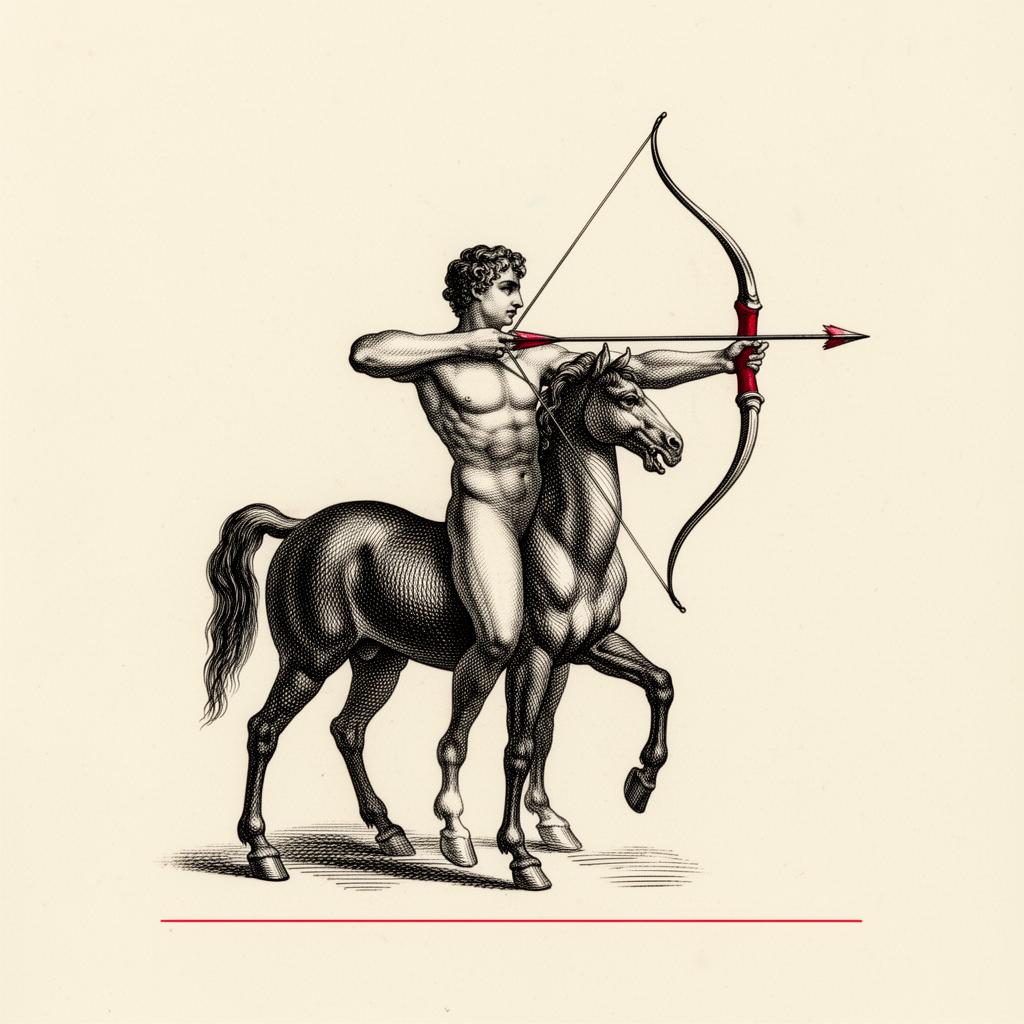
Every six months the models get smarter and the tokens get cheaper. Capabilities that were research problems in 2023 are commodities in 2026. Whatever a company does with raw intelligence alone, a competitor will do next quarter for less.
And yet the markets that run on trust, the ones where a professional signs the work, a patient opens up, a reader believes, and a buyer commits, remain barely transformed. Not because the technology is missing, but because these markets do not buy capability. They buy accountability. A professional cannot bill for work they cannot defend. A person will not hand their inner life to a system no one answers for. A reader will not believe a masthead no one signs.
That is the opening. The durable AI companies of the next decade will not be the ones that remove humans from the loop. They will be the ones that redesign the loop: machine scale underneath, human judgment on top, and a clear account of who decided what, and why. Kasparov called this pairing a centaur. On the chessboard, it beat the machine and the grandmaster alike.
We believe the same holds in the economy. Centaur Labs exists to build centaur companies. And the purest centaur of this era is the solo founder: one judgment, machine everything else.
For fifty years, the founding team was a technology constraint. You needed an engineer to build, a designer to ship, a marketer to reach anyone, an operator to keep the wheels on; even the myth of the garage had two people in it. Venture capital priced the constraint in and then enforced it: the solo founder was a red flag, a diligence checkbox, a discount on the term sheet.
The constraint is gone. A single founder with today's models writes the code, drafts the contracts, produces the content, answers the customers, and closes the books. Agents work through the night. The marginal cost of a colleague has collapsed, and with it the old arithmetic of the founding team. The companies of this decade will be built by the smallest teams in the history of the industry, and some of the best of them will be built by one person.
What one person cannot manufacture is exactly what the machine cannot provide: a second judgment, an honest argument, a network that answers the phone, a name beside yours when the institution across the table asks who else believes. Co-founders used to supply this. Now a studio can, without taking half the company to do it.
That is what Centaur Labs is built for. Our diligence assumes you are alone, our support replaces the org you did not hire, and our first check is priced on conviction, not headcount. You bring the judgment. We bring the firm.
The question is no longer whether one person can build the company. It is who stands beside them when it counts.
The centaur is one of the oldest images Western civilization has of a being made of two natures. In Greek myth he is Chiron, teacher of Achilles and Asclepius, healer, strategist, the rare centaur who tempered animal instinct with human reason.
The medieval knight and his horse were trained until they fought as one body, a centaur reborn in armor. And in 1998, after losing to Deep Blue, Garry Kasparov coined the modern sense of the word: a centaur is a human paired with a machine, and in serious chess that pairing reliably outperforms either alone.
That is the wager of the Labs. The model is the horse, powerful, fast, sometimes wild. Judgment is the rider. We back founders who refuse to let go of the reins, and the rider rides alone.
A studio, not an accelerator. No batch theater, no demo day, no standardized curriculum. Six commitments define how we build and how we back.
Some companies begin here, originated by the studio and matched with a founder we have already spent time with. Others arrive built, led by a founder who wants partners rather than passengers. Both doors lead to the same table.
We are not searching for a market that does not exist yet. We take business models the world already pays for and rebuild them for the new cost curve, where the work that used to require a floor of people now requires a founder and a machine.
Capability commoditizes. The account of who decided what, and why, does not. We look for products where a name is on the line, because that is the layer competitors cannot copy by upgrading a model.
Most venture infrastructure quietly assumes a team: the accelerator batch, the co-founder matching, the board-seat arithmetic. We inverted the assumption. The Labs is designed so a single founder operates with the surface area of a firm: partner judgment on tap, specialist advisors matched by focus area, design customers drawn from our network, and an AI-native operating stack we install from day one. Where others diligence your headcount, we diligence your judgment. The machine takes care of the hands.
We write early and we write on the strength of the founder's judgment, not the size of the payroll. The check is designed to reach a real customer, not to fund an org chart.
A handful of companies a year, each with direct partner sponsorship. We would rather be indispensable to a few founders than a logo on the deck of many.
We build where humans cannot be removed from the loop, only amplified: markets where a professional's name, a person's mind, a reader's trust, or a marketplace's integrity is on the line. Four categories, one common structure: an established model the world already pays for, rebuilt AI-native, with a centaur at the center. Each is a front where one founder with the right machine can now field an entire company.
Publishing, research, and intelligence products where the value is not the volume of words but the credibility of the byline. Machine reporting and synthesis underneath, an editor who signs the work on top.
Why the centaur wins hereThe masthead is the moat. Trust cannot be generated, only earned and then defended.
The solo openingOne editor with an agent newsroom can run a masthead that used to take a floor.
Products for the inner life, built for the regulatory and ethical reality of AI in mental health. Depth over dashboards, and a clear answer to who is responsible for the guidance a person receives.
Why the centaur wins herePeople disclose to systems they believe are accountable. Everything else stays surface level.
The solo openingOne clinically minded founder can now build the reflective first layer of care for a million inner lives.
Software for the licensed and the liable: lawyers, clinicians, accountants, advisors, analysts. The work must be defensible to a regulator, a client, or a court, which makes the human in the loop the product, not the overhead.
Why the centaur wins hereA professional cannot bill for work they cannot defend. The tool has to make defense easier, not harder.
The solo openingOne professional who has felt the pain can build the tool for everyone who shares it.
Matching, vetting, and settlement in markets that used to require an office of brokers. Agents handle discovery and coordination; a human underwrites integrity on both sides.
Why the centaur wins hereLiquidity is a machine problem. Trust between strangers is not.
The solo openingOne operator can run both sides of a market that used to need an office of brokers.
The first companies of the Labs cover three of the four fronts, with two more proving the model in adjacent arenas: research and learning. Some are studio-originated, some founder-led; all are built AI-native, on proven models, with the cost curve on their side.
The operating layer for people who work alone at the scale of a team. Centaur turns scattered context, tasks, and correspondence into one system that learns how you decide, compounding into someone unrecognizable a year from now.
gocentaur.aiA psychodynamic companion for understanding yourself. insite turns journaling, dreams, and daily patterns into a private map of the inner life: depth where the market settled for mood tracking, built for the regulatory reality of AI in mental health.
helloinsite.aiExpert intelligence at AI speed. Enquire moves investment, consulting, and policy teams from open question to decision-grade understanding, pairing vetted human expertise with structured AI research in a single environment. The centaur method, sold as a product.
enquire.aiEnglish, absorbed from life itself. Voscreen teaches language through thousands of short video moments, tuning to each learner and building fluency by instinct rather than instruction, at the pace of play.
voscreen.comA signed newsroom for a world moving faster than the news cycle. Atlas360 pairs machine coverage of markets, policy, and geopolitics with human editorial judgment, so every read carries an account of who stands behind it.
atlas360.newsBuilding in one of these arenas, even if it is just you? The next card could be yours. Apply to Cohort 2026 →
For the solo founder, this section is the point: everything a co-founding team would bring, without the cap-table arithmetic.
Weekly partner time. No analyst hand-offs, no junior intermediaries.
Warm introductions to operators, family offices, and institutional investors.
Forty-plus markets. On-the-ground access to regulators, customers, and counterparties.
Diligence-grade rigor on what your product, your data, and your story can withstand.
A short written application, read by a senior partner.
We respond within a week: yes, no, or a conversation.
Two working sessions on product, market, and judgment.
You join Cohort 2026 with direct partner sponsorship.
We prefer them. The Labs is designed around the assumption that you are one person with the leverage of a firm; our diligence tests judgment, not headcount. Teams are welcome too, provided they are small enough to move like one.
Idea stage through seed. If the product exists we will use it. If it does not, we want to see the wedge, the customer, and the reason the old cost structure no longer applies.
Priced on conviction rather than a fixed band, and sized to reach a real customer rather than to fund an org chart. We discuss numbers in the second conversation, not the first.
Yes, a minority position, with terms that keep a solo founder firmly in control of their own company. Studio-originated companies are structured differently and we say so up front.
No. The Labs runs remote by default, anchored in Washington, D.C., with partner access across forty-plus markets. We travel to where the customers are.